Reliable Septic Service. No Mess. No Stress

Reliable Septic Service. No Mess. No Stress
Where the Tough Jobs Get Done Right.Reliable Septic Service. No Mess. No Stress
Reliable Septic Service. No Mess. No Stress
Where the Tough Jobs Get Done Right.
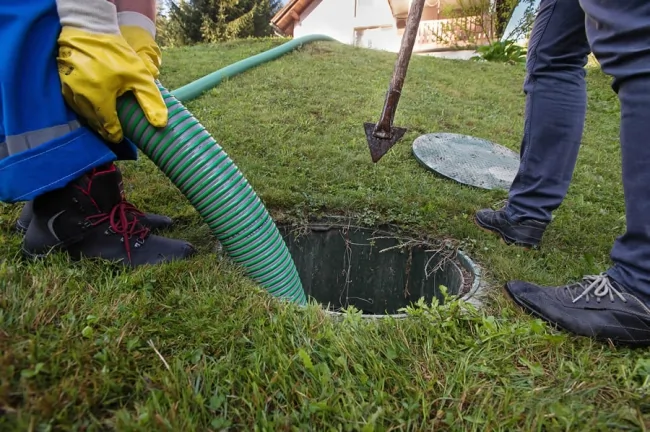
One of the most common questions homeowners ask is how often they need to pump their septic tank. The honest answer is that it depends on a few different factors. Household size, tank capacity, and how the system gets used all play a role in how quickly solids accumulate. At Septic Blue, we help homeowners figure out the right schedule for their situation before a problem develops. Keep reading to get a clear picture of what affects pumping frequency and how to stay ahead of it.
No two households use their septic system the same way. A retired couple in a three-bedroom house produces less wastewater than a family of five. Daily habits, the number of people using the system, and even what goes down the drains all change how fast solids build up in the tank.
Some households also introduce materials that complicate the breakdown process. Flushable wipes, excessive grease, certain cleaning products, and garbage disposal waste all slow the natural bacterial activity inside the tank. When the bacterial balance gets disrupted, solids accumulate faster, and the interval between each septic tank pumping shortens.
A septic company that inspects your system can give you a realistic estimate based on your actual usage patterns. A site-specific assessment is a lot more useful than following a blanket rule.
Tank size is one of the most direct factors in pumping frequency. A 1,000-gallon tank fills with solids faster than a 1,500-gallon tank, even under identical usage conditions. Here are general capacity benchmarks:
If your home was built with a tank that's undersized for your household, you'll need septic tank pumping more frequently than the standard schedule suggests. During a septic service, your technician can measure the sludge and scum layers to tell you exactly how much capacity you have left and how long you can go before the next pump-out.
Understanding what's happening in your tank makes the pumping schedule easier to take seriously. When wastewater enters the tank, it separates into different layers. Scum floats up to the top, clarified liquid sits in the middle and exits to the drain field, and sludge settles at the bottom. Bacteria break down organic material in that bottom layer, but they don't eliminate it completely.
The sludge layer grows. Once it takes up roughly 25 to 33 percent of the tank's total volume, the system starts losing its ability to separate waste properly. Solids can carry over into the drain field, where they clog the soil and cause failure that costs thousands of dollars to repair. Septic tank pumping removes the accumulated sludge before it reaches a dangerous level.
The middle liquid layer is the only one that should ever leave through the outlet baffle. When sludge or scum crosses into that effluent, the drain field absorbs materials it was never designed to handle. Scheduling regular septic service protects the drain field, which is the most expensive component of your entire system.
Scheduled septic tank pumping keeps problems predictable, but certain signs indicate the system needs attention sooner. Catching these early prevents a pump-out from turning into a full system failure. Watch for these indicators:
Any one of these symptoms warrants a call to a septic service before waiting for the next scheduled visit. Backing up waste inside a home creates a health hazard and accelerates drain field damage. The cost of an early pump-out is a fraction of what drain field restoration runs.
The simplest way to maintain a working schedule is to keep records. Note the date of every pump-out, the sludge and scum measurements the technician recorded, and any observations about the tank's condition. Those numbers tell you whether your current interval is accurate or needs adjustment.
Between septic pump-outs, protect the bacterial environment inside the tank. Avoid pouring bleach, antibacterial soaps in large quantities, or chemical drain cleaners directly into the system. Don't flush anything other than human waste and toilet paper. These steps slow sludge accumulation and extend the life of each pump cycle.
When you're ready to set up or revisit your pumping schedule, contact a septic company that inspects the tank rather than just pumping it on a timer. An inspection-based approach gives you data on your system's condition and lets you schedule the next septic tank pumping based on what's happening inside the tank, not just the calendar.
If you're not sure when your tank was last pumped, or if you've noticed any of the warning signs listed above, don't wait. Contact Septic Blue to schedule an inspection and pump-out. We check your tank's current condition, give you a clear pumping interval based on your household's usage, and keep your system running. Our team provides septic service that protects your drain field and keeps emergency repairs off your plate.
 May/14/2026
Selling a home with a septic system means buyers, inspectors,…
Read More May/13/2026
A professional septic pumping service covers everything from locating the…
Read More May/08/2026