Reliable Septic Service. No Mess. No Stress

Reliable Septic Service. No Mess. No Stress
Where the Tough Jobs Get Done Right.Reliable Septic Service. No Mess. No Stress
Reliable Septic Service. No Mess. No Stress
Where the Tough Jobs Get Done Right.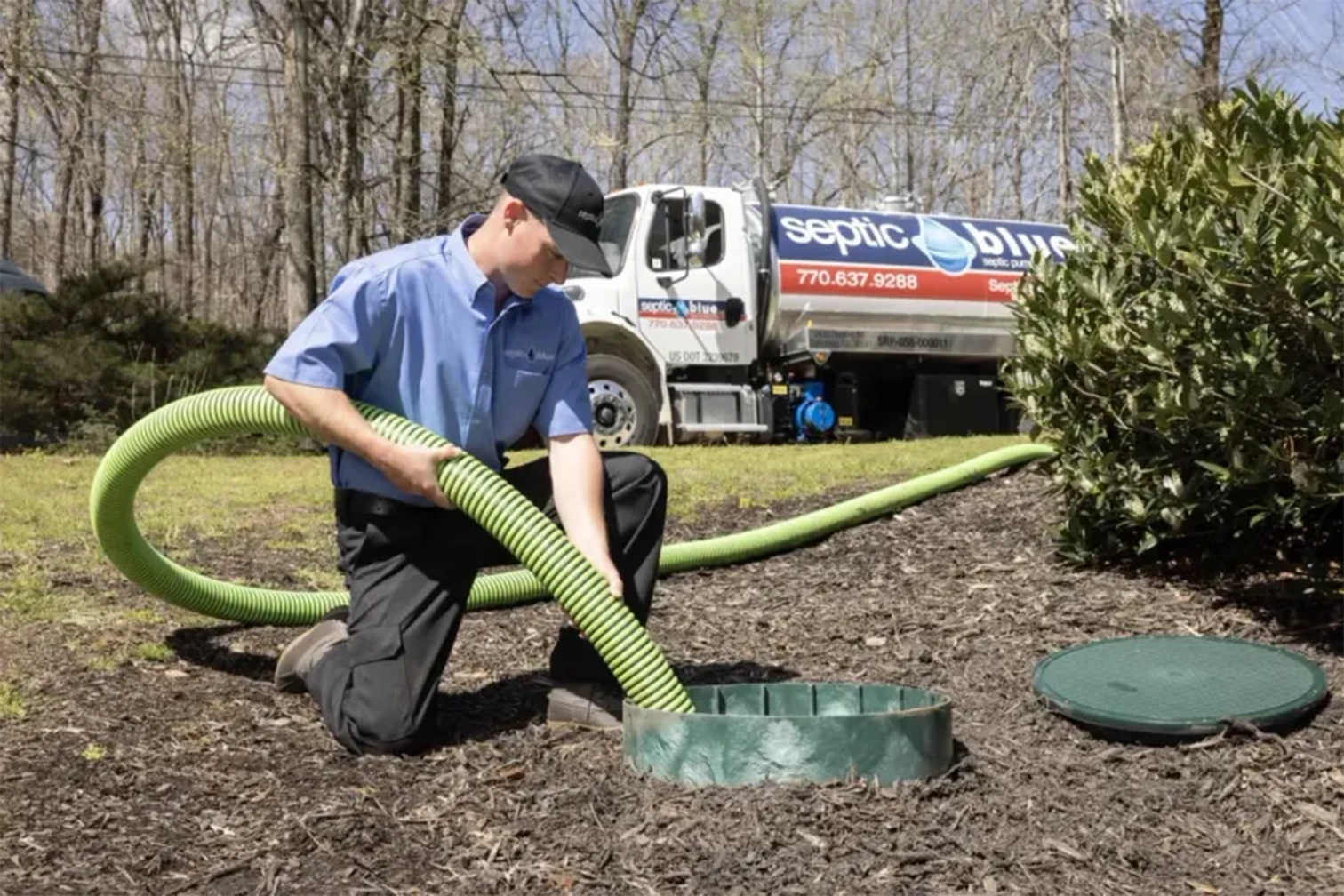
A professional septic pumping service covers everything from locating the tank lid to documenting inspection findings, and each step serves a specific purpose. Septic Blue walks through all of it during service visits, so you know exactly what the technician is doing and why. Keep reading for a breakdown of what's included and what we check before we leave your property.
Every visit starts with finding the access lid. If you have records or a diagram from a previous septic company, the technician uses those measurements to pinpoint the lid within a few feet. No records? The technician probes the soil with a thin metal rod along the suspected path between the house and the drain field until it strikes concrete or fiberglass.
Once located, the lid gets uncovered. Most tanks sit six inches to two feet below the surface. Lids buried deeper than 12 inches usually warrant a riser installation, since digging adds 20 to 40 minutes to each future visit and increases the cost of routine septic maintenance. The technician removes sod in clean sections, sets it aside on a tarp, and digs down to expose the full lid for safe lifting.
Before opening the tank, the technician checks the gasket and lid for cracks. A damaged lid lets surface water and rodents enter the tank, which dilutes the bacterial activity and pushes solids into the drain field early. If the lid is compromised, you'll get a recommendation to replace it before the next septic tank pumping appointment.
Pumping without measuring tells you nothing about how the tank is performing. The technician uses a sludge judge, a clear plastic tube about six feet long, lowered to the bottom of the tank to capture a vertical sample of the contents. The sample shows three distinct layers:
The technician records the thickness of each layer in inches. A sludge layer thicker than one-third of the tank's depth means pumping was overdue. A scum layer pushing toward the outlet baffle signals the same problem. These numbers go on your service report and help predict when you'll need septic cleaning next, whether that's two years out or four.
Measuring also catches early warning signs. Effluent that smells unusually sour points to a pH imbalance from chemical drain cleaners or excessive bleach use. Floating solids in the middle layer suggest a failing inlet baffle. The technician notes all of it before the pump truck hose enters the tank.
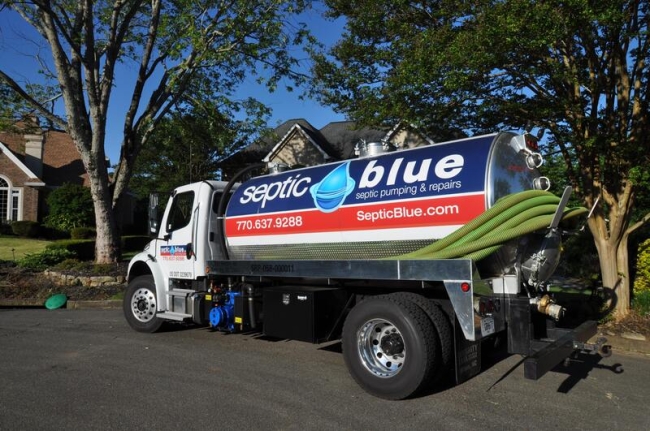
The pump truck connects a four-inch suction hose through the access lid and lowers it to the bottom of the tank. The vacuum pump pulls sludge, scum, and effluent into the truck's holding tank at roughly 150 to 350 gallons per minute, depending on the truck. A 1,000-gallon tank empties in 15 to 25 minutes under normal conditions.
While pumping, the technician uses the hose to break up the scum mat and agitate compacted sludge at the bottom. Compacted sludge that sits undisturbed turns into a hardened layer that the suction hose can't lift. The agitation, sometimes called backflushing, pulls liquid back into the tank to loosen the solids, then suctions the slurry out completely. This is why partial pumping leaves 20 to 30 percent of the sludge behind and shortens the interval before your next septic service.
The technician keeps pumping until the tank appears empty on visual inspection. Waste collected during the visit gets transported to a permitted treatment facility.
With the tank empty, the technician shines a light inside to inspect the baffles, the T-shaped fittings on the inlet and outlet pipes. The inlet baffle directs incoming wastewater downward so it doesn't disturb the scum layer. The outlet baffle prevents scum from flowing into the drain field. Both are critical, and both fail in predictable ways. Common findings during baffle inspection include:
The technician documents what's broken and what's intact, with photos when possible. A missing outlet baffle sends solids straight to the drain field, and drain field repairs run $5,000 to $15,000 in the Columbia area. Catching a $200 baffle replacement before it fails protects the rest of the system. The technician also rinses the inlet pipe to confirm that flow from the house is unobstructed.
After the tank work, the technician walks the drain field. They look for soft spots, standing water, unusually green grass strips, or sewage odors above the trenches. Each of these points to a saturated soil from hydraulic overload, a clogged drain line, or biomat buildup at the trench bottom.
If your system has a distribution box, the technician locates it and removes the lid. The D-box splits effluent evenly across the drain field laterals, and an unlevel box sends most of the flow to one or two lines, exhausting that section of the field years before the rest. The technician checks for:
Findings go on the written report you receive at the end of the visit, along with measurements, photos of any concerns, and recommended timing for your next appointment. Reliable septic tank pumping records also help during home sales, since buyers and inspectors ask for service history going back three to five years.
A complete septic pumping visit measures, pumps, inspects, and documents, and skipping any of those steps shortens the life of your system and raises your repair costs. Septic Blue handles every step on every visit, from locating a buried lid to checking your drain field before we leave. Call us to schedule your next septic cleaning or septic maintenance appointment, and you'll get a clear written report, honest recommendations, and a technician who explains what they found before the truck pulls away.
May/13/2026
A professional septic pumping service covers everything from locating the…
Read More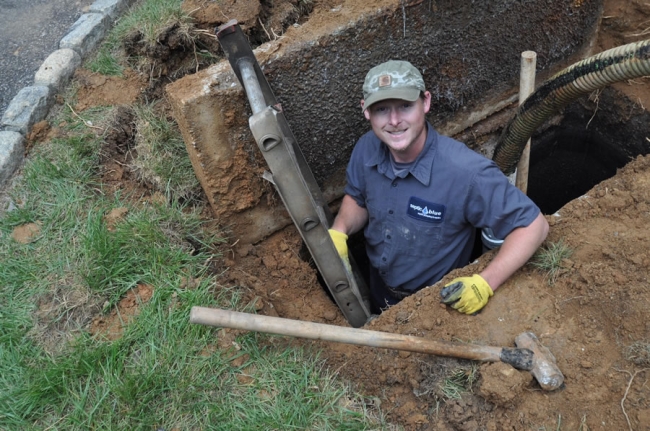 May/08/2026
Your septic system will usually give you warning signs before…
Read More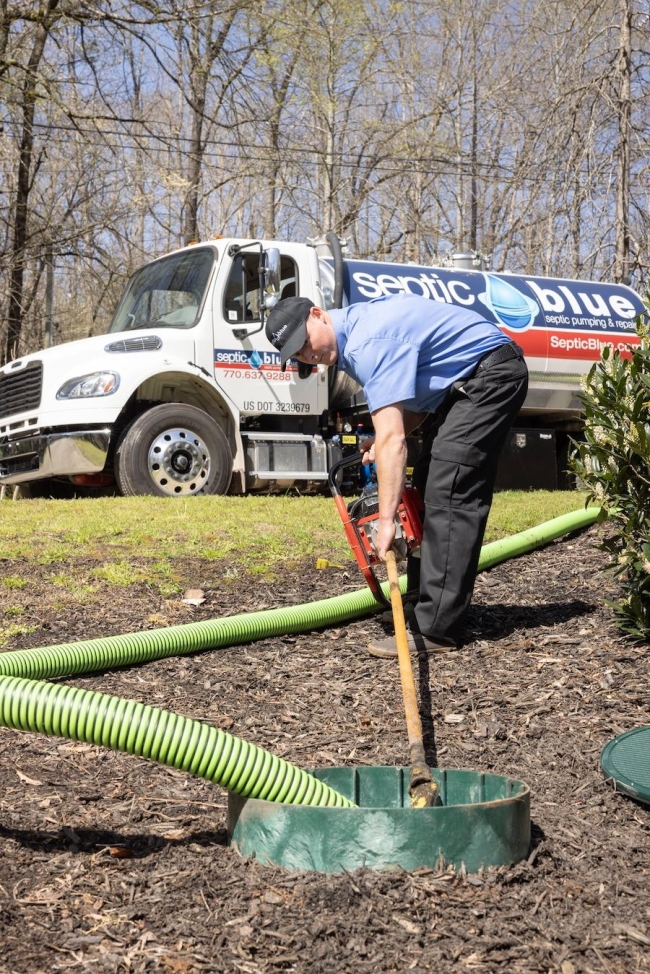 May/08/2026