How Soil Conditions Around Your Property Affect Septic Performance
The drain field does most of the work in a septic system, and it depends entirely on the surrounding soil to function. Sandy soil drains quickly and handles higher volumes without issue. Dense clay soil drains slowly and saturates under load, which limits how much effluent the drain field can process before backing up. If your property sits on clay-heavy ground, your pumping schedule may need to be shorter than the standard recommendation to compensate.
High water tables create a separate challenge. When groundwater rises close to the drain field, effluent can't percolate downward the way it should. Pressure builds in the system and pushes wastewater toward the surface. Properties near Arcadia Lake can face seasonal water table shifts depending on rainfall and lake levels. A septic service provider who understands local conditions can help you build a maintenance schedule that accounts for those problems.
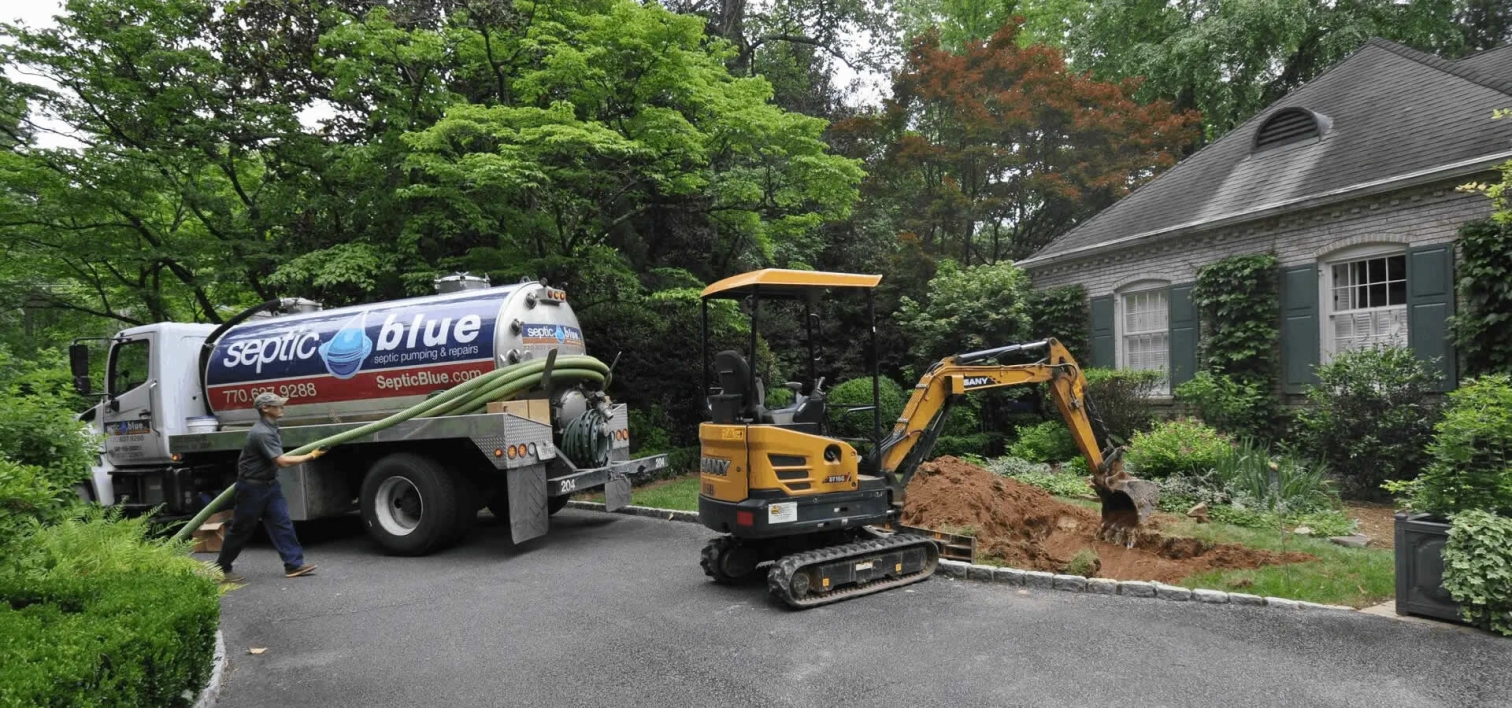
Compacted soil from foot traffic, vehicle parking, or heavy landscaping directly above the drain field reduces its absorption capacity. Roots from nearby trees or shrubs compound the problem by invading the drain field lines and blocking flow. A thorough septic service visit includes looking at the condition of the drain field area, not just pulling waste from the tank.
How Tree Roots Threaten Your Septic System From the Outside In
Tree roots follow moisture, and a septic system produces a consistent supply of it. Roots from trees as far as 30 feet away can work their way into pipe joints, tank seams, and drain field laterals. Once inside, they expand and block flow. A slow-draining system with no obvious indoor plumbing cause is frequently a root intrusion problem that's been developing for years.
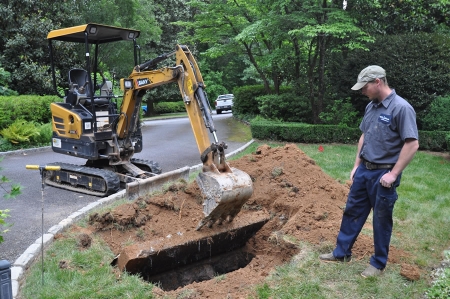
A pipe that appears intact from the outside can have severe root infiltration inside. Camera inspection is the only reliable way to confirm root intrusion in the lines. If roots have reached the drain field laterals, the repair scope expands considerably. Removing the roots and repairing or replacing the affected lines takes time and equipment. Catching intrusion early, before roots establish deep inside the pipes, limits the labor and the cost.
Prevention involves more than removing trees close to the tank. It means knowing where your system's components are buried and keeping that area clear of deep-rooted plantings. Shallow-rooted ground cover is a better choice for landscaping over or near septic infrastructure. A septic company in Arcadia Lake that maps your system during a service visit gives you the information you need to make those decisions with accuracy.
Why Staying on a Pumping Schedule Protects Your Property Value
Buyers and their inspectors look at septic systems closely, and a neglected tank leaves a clear record. Sludge buildup beyond normal levels, damaged components, and drain field stress all show up during an inspection. A failed septic inspection can delay or kill a sale outright, or force a price reduction that exceeds what years of routine maintenance would have cost in total.
Most households need septic tank pumping every three to five years. That interval shifts based on household size, water usage habits, and whether the home uses a garbage disposal. A disposal adds organic load to the tank and compresses the interval between service visits. Large households with high daily water use may need pumping every two years. Tracking your pumping history and keeping records from each visit gives you something concrete to present to a buyer and their inspector.
Septic pumping in Arcadia Lake from a licensed company also produces documentation. A reputable septic company in Arcadia Lake records the tank condition, sludge depth, and any components flagged for repair or monitoring. The paper trail demonstrates responsible ownership, gives future technicians a reliable baseline, and removes one of the most common sources of friction in a real estate transaction. A home with documented septic maintenance history sells with fewer complications than one without it.
What to Do If You Notice Standing Water Near Your Drain Field
Standing water above the drain field is a sign that the soil has reached saturation and can no longer absorb effluent at the rate the system is producing it. This happens for a few reasons. Either the tank is overdue for septic pumping in Arcadia Lake, and solids have pushed into the drain field, the drain field itself has failed, or the soil is temporarily saturated from heavy rainfall. Each cause has a different solution, and treating the wrong one wastes time and money.
The first step is to reduce water input into the system immediately. Cut back on laundry loads, showers, and any non-essential water use until a technician can look at the situation. Running more water into a saturated system accelerates the damage. If the standing water has an odor, keep people and pets away from the area. Untreated wastewater at the surface is a health risk and, in many jurisdictions, a code violation that carries fines.
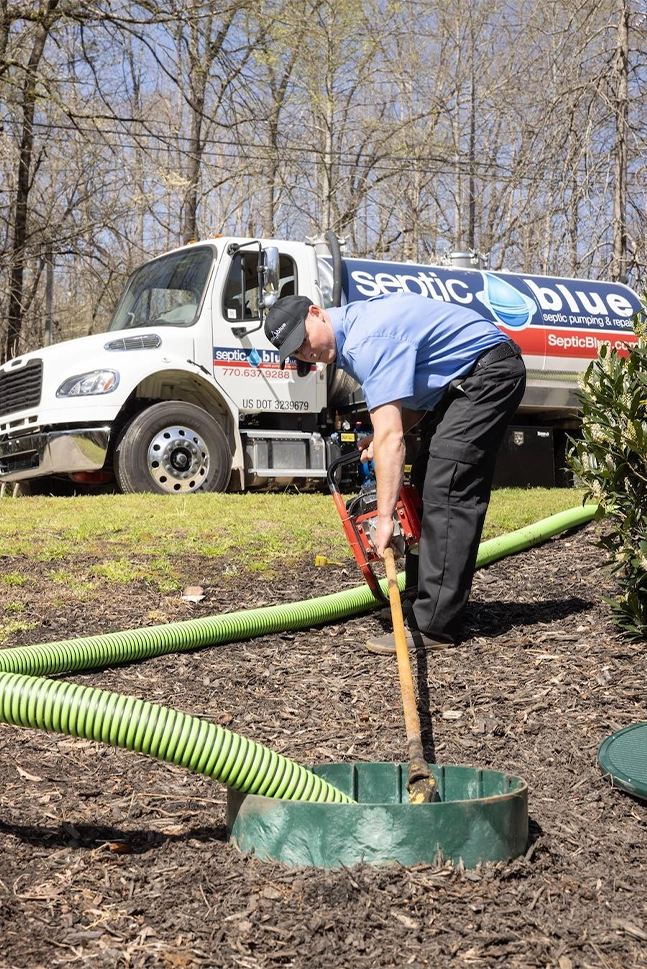
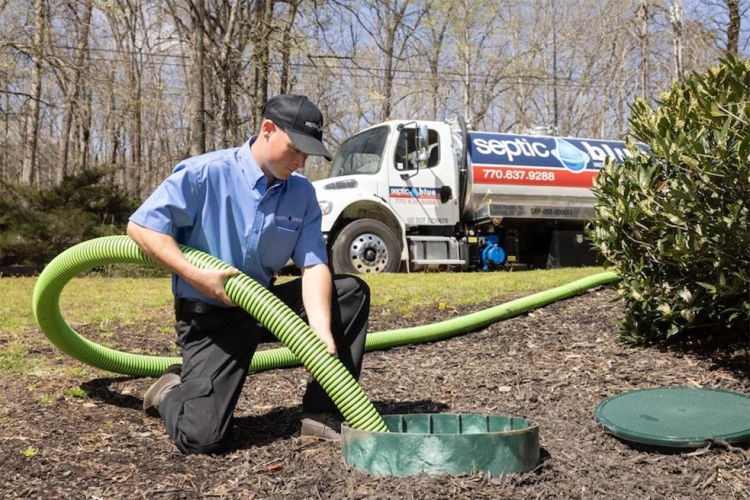
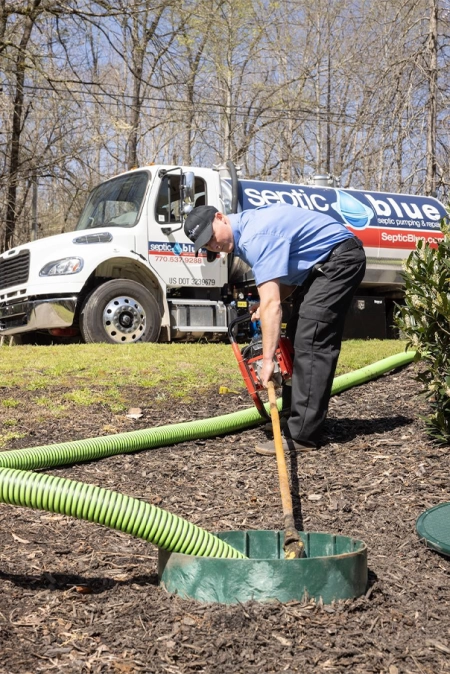
Septic cleaning in Arcadia Lake should be scheduled as soon as standing water appears, even if you're not sure of the cause. A technician can pump the tank, inspect the outlet baffle, and evaluate whether the drain field lines are blocked or collapsed. If the drain field needs repair or replacement, knowing the exact condition of the tank first affects how that repair is priced.
Call Septic Blue for Reliable Septic Service in Arcadia Lake
Septic problems escalate fast when they're ignored, but they're largely preventable with consistent maintenance. If you're overdue for a routine pump-out, are seeing early warning signs, or want to buy a home and need the system evaluated before closing, Septic Blue can help. Call us to schedule septic tank pumping in Arcadia Lake and get a technician on-site who will give you an accurate read on your system's condition. We're a local septic company built on honest diagnostics and practical recommendations. Call today to schedule your septic service in Arcadia Lake.