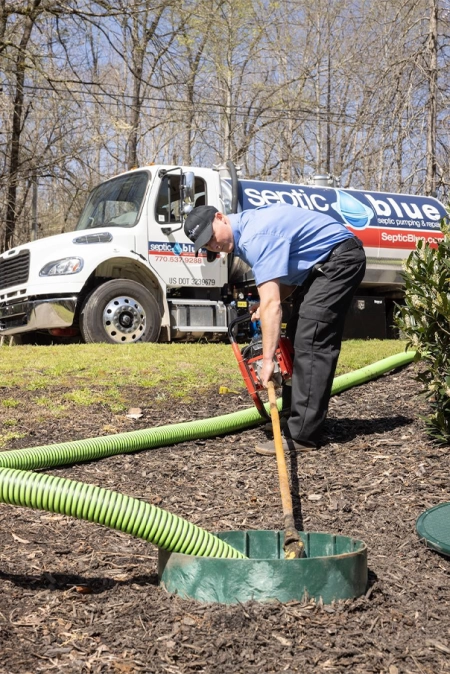
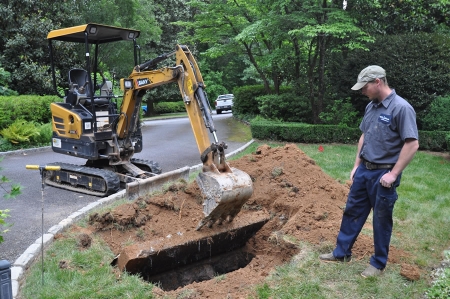
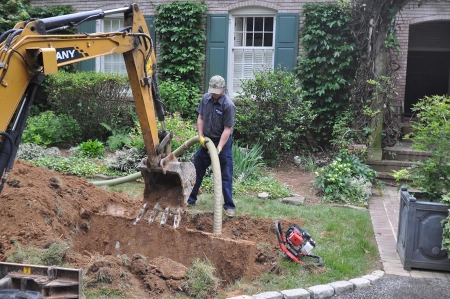
These measurements tell you how fast your tank is filling and if your pumping schedule is matched to your current household's usage. The technician should also check for signs of hydraulic overload, which happens when more water enters the tank than the drain field can absorb.
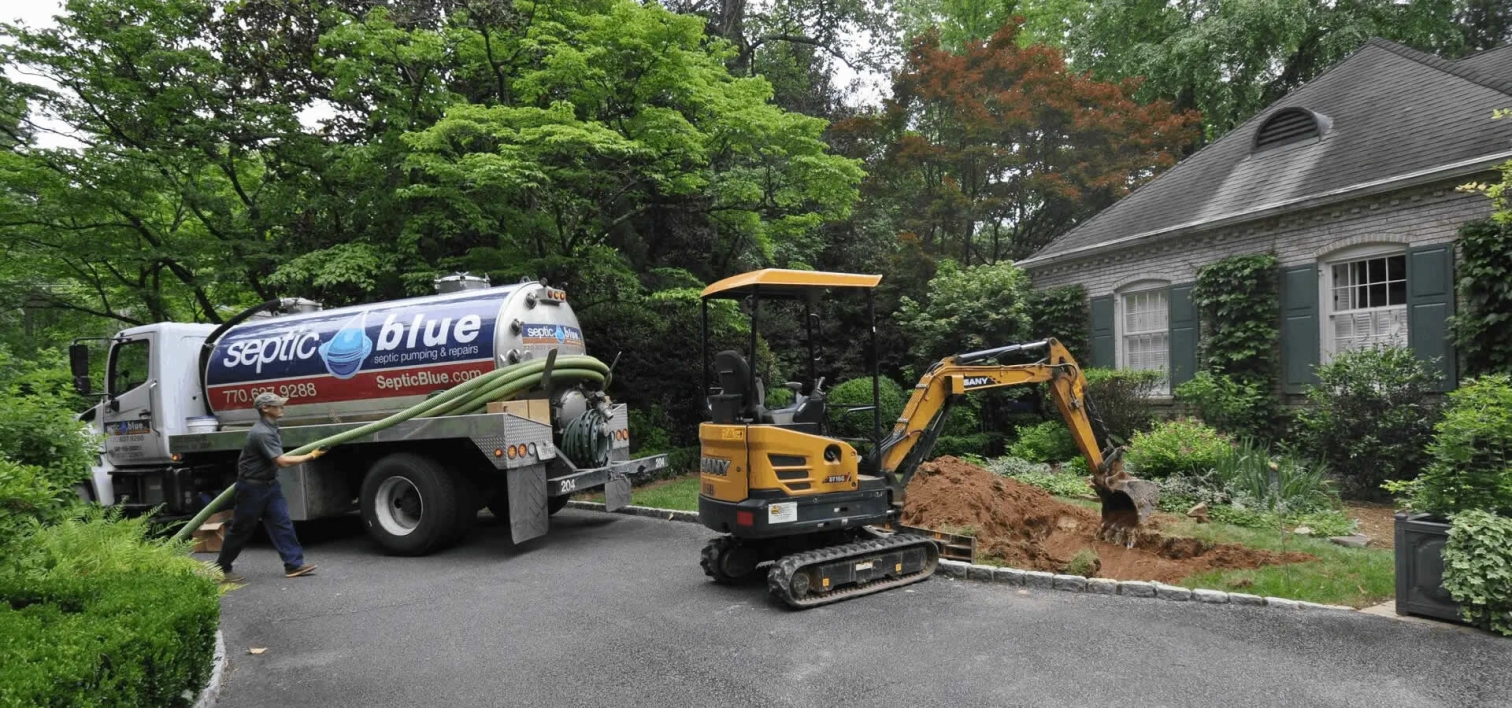
Indicators include saturated soil over the leach lines and effluent surfacing in the yard. Catching that problem early prevents a full drain field replacement, which runs much higher in cost than a pump-out and septic repair. During a septic cleaning in Great Falls, our team can document your system's condition during the visit.
What Happens If You Skip Pumping for Too Many Years
Sludge accumulates at the bottom of the tank whether you pump it or not. When the sludge layer rises high enough, solids push through the outlet baffle and travel into the drain field. Once solids reach the leach lines, they clog the soil pores. Clogged soil can't absorb effluent, and the system backs up into the house or surfaces in the yard.
Drain field restoration is possible in some cases, but it involves aeration, biological treatments, or full line replacement, depending on how much damage has occurred. These options aren't cheap. Routine septic tank pumping in Great Falls costs a fraction of what drain field repair or replacement runs. The options are to pump on schedule or pay more later.
Most households need pumping every three to five years. Larger families, garbage disposal use, and older tanks can push that interval closer to two to three years. A technician who performs septic pumping in Great Falls can give you a specific recommendation based on your tank size and usage patterns instead of a generic estimate pulled from a chart.
How to Get the Most Out of Every Septic Service Visit
Before the technician arrives, locate your tank lid if you know where it is. If you don't, the service provider can find it, but having that information ready cuts down on time and potential lawn disruption. Keep a copy of your system's as-built drawing if the previous owner left one. That document shows tank placement, the number of compartments, and the drain field layout.
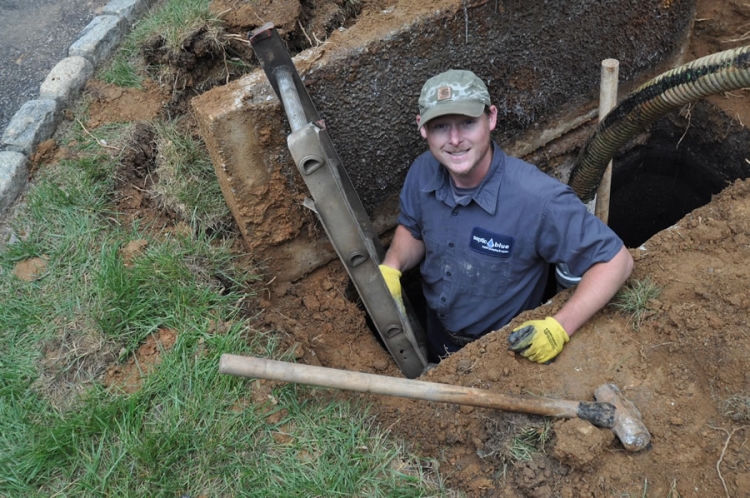
During the visit, ask the technician to walk you through what they're seeing. A good septic company explains the condition of the baffles, the tank walls, and the effluent filter if your system has one. Effluent filters need cleaning at every pump-out, and if yours is in place, you want confirmation that it's been serviced. Ask about the sludge and scum measurements so you can compare them at the next visit and track how your system is performing.
After the pump-out, avoid excessive amounts of water use to help reduce strain on the system. For septic cleaning in Great Falls, the goal is to have a system that's set up to work correctly until the next scheduled service.
Are You Looking for a Reliable Septic Company in Great Falls?
Septic Blue offers septic tank pumping in Great Falls and surrounding communities. Whether you're overdue for a pump-out or just moved into a home with a septic system and want a baseline inspection, we can get your system back on track. As a septic company in Great Falls, we've built our reputation on showing up and doing the work right. Call Septic Blue to schedule your next service.