The Most Common Septic Tank Components That Fail and Why
Baffles are the most frequent point of failure in residential septic tanks. The inlet baffle slows incoming waste so it does not disturb the settled solids at the bottom. The outlet baffle holds back scum and solids so only clarified liquid exits into the drain field. When either one deteriorates, the whole treatment process breaks down.
Concrete baffles corrode from hydrogen sulfide exposure. Older tanks used concrete baffles without any protective coating, which made them vulnerable from the start. Many tanks built in the last few decades use sanitary tees made from PVC, which hold up better but can still crack or come loose at the fitting. A septic inspection in Arcadia Lake will identify baffle condition as part of a standard evaluation and catch deterioration before it causes a backup. Other components that fail regularly include:
- Risers and lids, which crack under ground pressure or UV exposure, and create direct pathways for groundwater infiltration
- Pump floats in systems with dosing chambers, which stick in the on or off position and either burn out the pump or prevent dosing entirely
- Distribution boxes in multi-line drain fields, which crack and allow uneven flow that saturates one section of the field while starving another
- Effluent filters, which clog when pumping intervals are too long, restrict flow out of the tank
Slow drains throughout the house point to inlet problems. Soggy drain field areas point to outlet problems or a saturated field. A pump alarm that triggers repeatedly points to a float or pump failure. Knowing which component failed determines what gets repaired and what gets left alone.
What Causes Cracks and Structural Damage in Septic Tanks
Concrete tanks are durable, but they aren't indestructible. Hydrogen sulfide gas produced during waste decomposition attacks concrete from the inside, and gradually eats away at the walls and lid. Tanks that have never been pumped on a proper schedule accumulate gases at higher concentrations, which accelerates that deterioration. Over a long enough period, the concrete loses structural integrity and develops hairline cracks that widen with soil movement.
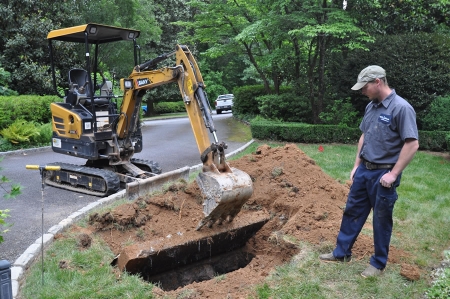
Soil conditions around the tank matter as much as what happens inside it. Expansive clay soils shift seasonally as they absorb and release moisture, and that movement puts lateral pressure on tank walls. Vehicles or heavy equipment driven over an unprotected tank compact the soil and transfer load directly to the lid and upper walls. A single pass from a loaded truck can crack a lid or compromise a riser connection. Septic installation in Arcadia Lake accounts for these conditions by specifying burial depth and placing tanks away from traffic areas, but older installations may not have followed those standards.
Tree roots are another consistent source of structural damage. Roots follow moisture, and a leaking tank provides a reliable water source. Once roots penetrate a crack, they widen it with each growing season. By the time roots are visible inside a tank during inspection, the crack they entered through has already been open long enough to allow groundwater infiltration. Groundwater infiltration dilutes the tank's bacterial population and reduces treatment efficiency, which means effluent leaving the tank is less processed than it should be when it reaches the drain field.
What a Proper Septic Tank Inspection Covers
A thorough inspection does more than confirm the tank needs work. It documents the condition of every accessible component before anyone picks up a tool. That documentation matters if you are buying or selling a home, filing an insurance claim, or trying to understand why a problem keeps recurring after previous repairs.
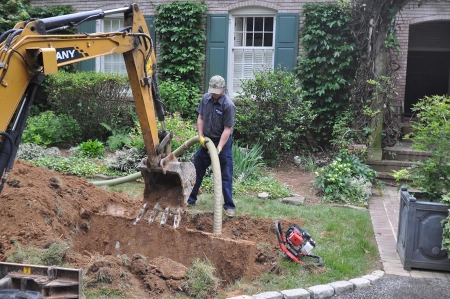
During a septic inspection in Arcadia Lake, a technician will locate and expose the tank lids, measure scum and sludge layers, check baffle condition and position, and look for signs of groundwater infiltration or effluent leakage. In systems with pumps, the float switches and alarm circuits get tested. Distribution boxes get checked for cracks and uneven flow. The drain field area gets a visual assessment for surfacing effluent or dead vegetation patterns that indicate saturation. The technician will also check for any structural cracking visible from inside the tank and note if the tank is holding its liquid level correctly.
Septic maintenance in Arcadia Lake should include an inspection every three to five years, even when nothing seems wrong. Problems caught early, like a baffle that's starting to separate or a lid that has developed a hairline crack, cost a fraction of what they cost after a backup or a field failure. A cracked lid that's ignored allows rainwater to enter the tank, overloads the system during heavy storms, and can create a dangerous collapse hazard.
How Pumping Frequency Affects the Long-Term Condition of Your Tank
Septic pumping in Arcadia Lake, SC removes accumulated solids that the bacterial process can't fully break down. Every tank accumulates a sludge layer at the bottom and a scum layer at the top. When those layers grow thick enough to reduce the tank's working volume, solids start passing through the outlet baffle and into the drain field. Once solids reach the field, they clog the soil pores that allow effluent to absorb. A clogged drain field doesn't recover easily and, in many cases, requires full replacement.
The standard pumping interval for a residential tank is every three to five years, but that range shifts based on household size and water use. A family of five using a 1,000-gallon tank will fill it faster than a couple using the same tank. A septic company doing a first-time service call on a tank with no maintenance history will pump it regardless of the interval and assess actual sludge accumulation to set a realistic schedule going forward.
Consistent pumping also protects the baffles and the tank walls. A tank running with excessive solids puts more biological load on the outlet baffle and produces more hydrogen sulfide, which speeds up concrete corrosion. Septic maintenance in Arcadia Lake that includes pumping on schedule extends the life of every other component in the system. Skipping one or two pump cycles to save money routinely results in baffle replacement, drain field repairs, or both.
Do You Need a Reliable Septic Tank Repair in Arcadia Lake, SC?
Regular pumping, periodic inspections, and paying attention to early warning signs are what prevent a repaired system from cycling back into failure. Septic Blue is ready to diagnose your system, explain your options honestly, and complete repairs built to last. Call us today to schedule your inspection.